

Engagement
The Engagement Ring Guide: Kuala Lumpur Edition
A private jeweller's honest walkthrough — everything we'd tell you across the table.
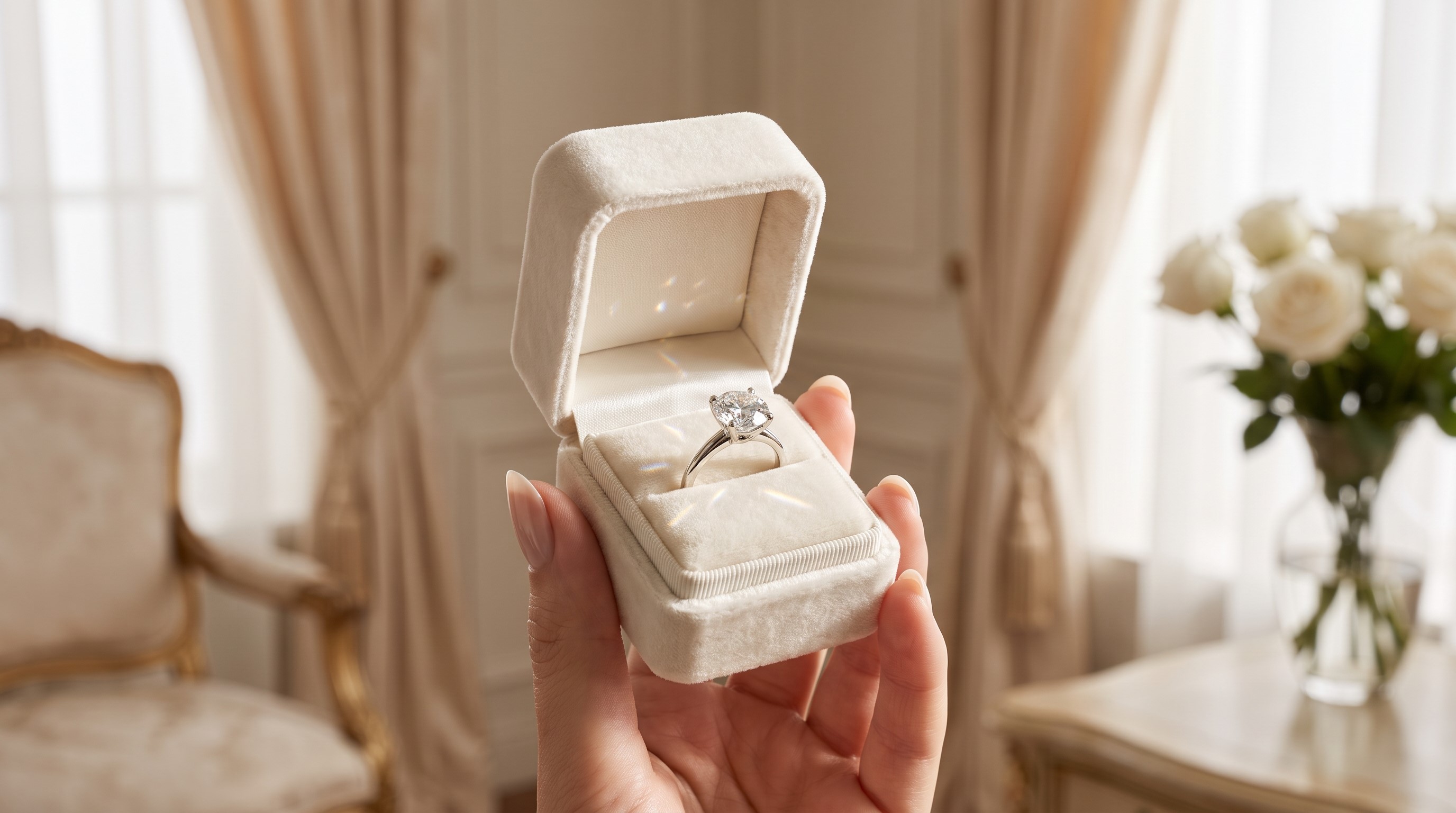
Buying an engagement ring is, for most people, the first serious piece of jewellery they'll ever purchase — and often the most emotionally charged. You want it to be beautiful, you want it to last, and quietly, you want to feel certain you didn't overpay or miss something obvious. In Kuala Lumpur, where you can buy a ring anywhere from a mall counter to a wholesale office in Jalan Bukit Bintang, that certainty can be hard to come by.
This guide is the conversation we have with clients every week, written down. No sales pressure, no jargon for its own sake — just the things worth understanding before you commit.
Start with the budget, honestly
Forget the old "two* or three months' salary" rule — it was a marketing slogan, not financial advice. A sensible budget is simply an amount you can spend without strain, on something you intend to keep for life. In KL, meaningful engagement rings begin around RM3,000–5,000 for a modest natural diamond solitaire and rise from there with size and quality.
What matters more than the number is how the budget is allocated. The same RM8,000 can buy a larger, lower-clarity stone or a smaller, more brilliant one. A good jeweller helps you decide which trade-offs suit the wearer — not which stone earns them the most commission.
Understanding the 4Cs (without the overwhelm)
Diamonds are graded on four characteristics. Here's what each one actually means for how the ring looks on a hand:
Cut — the one that matters most
Cut is not shape (round, oval, cushion); it's how well the diamond's facets are proportioned to return light. A superbly cut diamond looks alive; a poorly cut one looks dull even if it's large. If you optimise one C, make it this one — it's the difference between sparkle and glass.
Colour
Graded D (colourless) to Z (light yellow). For white-gold and platinum settings, G–H offers the best value: it appears white to the eye without the premium of a D–F stone. In yellow-gold settings you can go slightly warmer and no one will notice.
Clarity
This measures internal marks called inclusions. The secret most retailers won't volunteer: an SI1 or VS2 diamond is usually "eye-clean" — meaning you cannot see any inclusion without magnification — at a fraction of a flawless stone's price. You are paying for a certificate grade, not for what anyone will ever see.
Carat
Carat is weight, not size. Because of how diamonds are cut, a well-proportioned 0.90ct can look every bit as large as a poorly cut 1.00ct — and cost noticeably less, because prices jump at the round-number weights. Buying just under a milestone weight is one of the easiest ways to stretch a budget.
Natural vs lab-grown diamonds
This is the biggest shift in the industry in a generation, and it deserves a clear answer. Lab-grown diamonds are chemically, optically and physically identical to mined diamonds — they are real diamonds, not imitations like cubic zirconia or moissanite. The only difference is origin: one formed in the earth over billions of years, the other in a laboratory over weeks.
The practical consequence is price. A lab-grown diamond typically costs a fraction of a natural one of the same specification, letting you buy visibly larger or higher quality for the same money. The trade-off is resale and rarity: natural diamonds hold value in a way lab-grown stones, which can be produced in quantity, do not.
Neither choice is "right." A couple prioritising size and value on a fixed budget often loves lab-grown; a couple who values the romance of a stone forged in the earth, or who thinks of the ring as an heirloom, leans natural. We stock both and will never make you feel small for choosing either.
Choosing the setting
The setting is the metalwork that holds the stone, and it shapes the ring's whole character:
- Solitaire — a single stone, timeless and unfussy. Never goes out of style.
- Halo — small diamonds encircling the centre stone, making it appear larger and adding sparkle.
- Three-stone — a centre flanked by two smaller stones, often read as past, present and future.
- Pavé band — tiny diamonds set along the band itself for extra brilliance.
Metal matters too. Platinum is the most durable and naturally white but costs more; 18K white gold looks near-identical at lower cost but needs occasional re-plating; yellow and rose gold are warm, low-maintenance and increasingly fashionable.
Getting the ring size right (discreetly)
If it's a surprise, borrow a ring she already wears on the relevant finger and have it measured — this is the most reliable method. Failing that, most rings can be resized after the proposal, so don't let sizing anxiety delay you. We size every VANA ring for the wearer as part of the piece.
The questions worth asking any jeweller
- Is this diamond certified, and by whom? (GIA and IGI are the most respected.)
- Is the stone natural or lab-grown — and is that stated on the certificate?
- For jade or coloured stones: is it treated, and how?
- Can I see the stone loose, under magnification, before it's set?
- What's your policy on resizing, servicing and trade-up?
A jeweller who welcomes these questions is one you can trust. A jeweller who deflects them is telling you something too.
Why a private appointment changes the experience
Choosing a ring is not a transaction to rush under bright shop lights with someone waiting behind you. At VANA, it's a private, unhurried appointment — real stones on the table, honest grading explained in plain language, and the same two people (Wayne and Emily) guiding you from first question to finished ring. Because a decision this meaningful deserves the time to get it right.
About the author
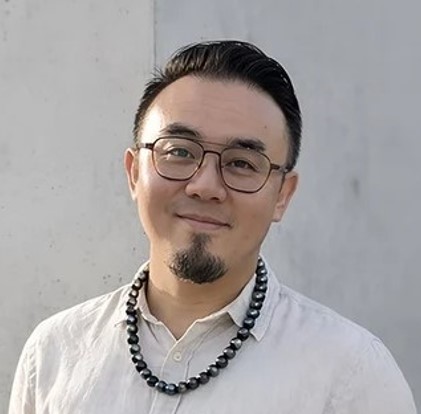
Wayne Lau is a third-generation jeweller and co-founder of VANA Fine Jewellery in Ampang, Kuala Lumpur. He learned stones at his grandmother's wholesale bench in Taiping, and now advises clients privately alongside his wife and co-founder, Emily Tan. Every guide in this Journal is written from what happens at the consultation table — nothing else.
Ready to Begin?
Tell us about the moment you're marking. We'll guide you to a ring you'll both love — no pressure, ever.
Ask About Engagement Rings