

Pearls
The Pearl Guide: South Sea, Akoya & Freshwater
How to tell the great from the merely good — and choose pearls you'll wear for a lifetime.
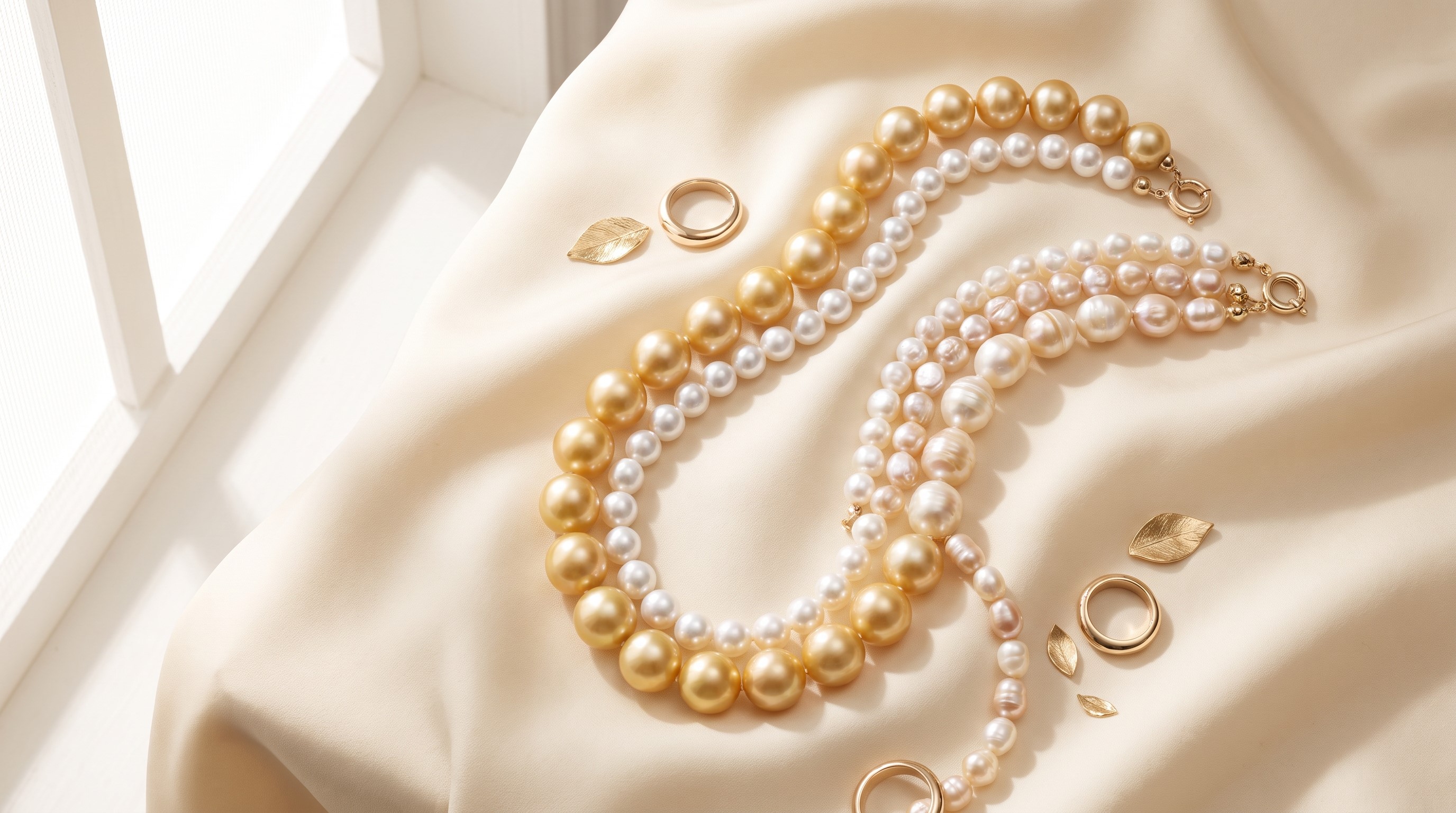
Pearls are the oldest gem known to humankind, worn long before anyone learned to cut a diamond. They ask for nothing — no faceting, no polishing — arriving from the water already complete. That quiet perfection is exactly their appeal, and also what makes them harder to judge than a sparkling stone. With a pearl, everything comes down to lustre: the deep, almost liquid glow that separates a treasure from a trinket.
Here is how to understand pearls, and buy them well.
The main types of pearl
South Sea
The largest and rarest of cultured pearls, grown in the warm waters of Australia, Indonesia and the Philippines. They range from silvery white to a luxurious deep gold, and their size — often 10 to 16mm — gives them real presence. Their thick nacre produces a soft, satiny glow rather than a mirror shine. South Sea pearls sit at the top of the market, and a fine golden strand is among the most coveted pieces in all of jewellery.
Akoya
The classic white pearl, cultivated chiefly in Japan. Akoya pearls are prized for their near-perfect round shape and their bright, sharp, almost mirror-like lustre. They're typically smaller (6 to 9mm), which makes them the timeless choice for a refined necklace or stud earrings — the pearls most people picture when they picture pearls.
Tahitian
The famous "black pearls," grown in French Polynesia, though their colours actually span grey, green, peacock, aubergine and silver. Exotic and dramatic, a good Tahitian shows overtones that shift as the light moves. They occupy the higher end alongside South Sea.
Freshwater
Grown mostly in lakes and ponds in China, freshwater pearls are the most accessible and come in the widest range of shapes, sizes and pastel colours. Quality varies enormously — the finest rival Akoya in beauty at a gentler price, while the lowest grades look flat and dull. This is the category where a trained eye saves you the most.
What actually determines value
Lustre — always first
Lustre is the life of a pearl. Hold it to the light: a fine pearl reflects that light sharply, almost like a soft mirror, with a glow that seems to come from deep within. A poor pearl looks chalky or matte. If you learn to judge only one thing, learn lustre — it matters more than size, colour or even shape.
Nacre thickness
Nacre is the substance the oyster lays down around the nucleus, and it's what creates lustre. Thick nacre means a lustrous, durable pearl that will last generations; thin nacre looks dull and can wear away to reveal the bead beneath. Lustre and nacre are two sides of the same coin.
Surface
Because pearls are natural, small marks are expected and honest — a perfectly flawless pearl is exceptionally rare and priced to match. What you want is a clean surface where any blemishes are minor and easily hidden at the drill hole or against the skin.
Shape
Perfectly round pearls are the rarest and most valued, but they aren't the only beautiful option. Teardrop and baroque (irregular) pearls have a character all their own and are often chosen deliberately for that reason.
Size and matching
Larger pearls are rarer and cost more, size for size. And in a strand, matching matters as much as any single pearl — a necklace where every pearl agrees in colour, lustre and size represents many pearls set aside to find the few that belong together.
Are they real? Natural, cultured and imitation
Three terms worth separating. Natural pearls form without any human help and are extraordinarily rare and valuable today. Cultured pearls are real pearls grown on farms with a gentle nudge from a pearl farmer — this is what almost all fine pearl jewellery is, and it's entirely genuine. Imitation pearls are glass or plastic beads coated to mimic the look, and they are not pearls at all.
A simple time-honoured test: gently rub a pearl against the edge of your tooth. A real pearl (natural or cultured) feels slightly gritty; an imitation feels perfectly smooth. It's not definitive, but it's a telling first clue.
Caring for pearls
Pearls are soft and organic, so they need a little kindness. Put them on last, after perfume and hairspray, and wipe them with a soft cloth after wearing. Keep them away from harsh chemicals, store them flat rather than hanging (silk stretches), and let them breathe — pearls kept sealed away can dry out. Worn often and cared for simply, they last lifetimes.
Choosing pearls with VANA
Pearls reward being seen in person — lustre simply doesn't translate to a screen. In a private appointment we'll lay strands side by side, turn them in the light, and show you exactly what separates one grade from the next, so you can feel the difference for yourself. Whether it's a first strand or an heirloom-quality piece, you'll choose with clear eyes.

About the author
Wayne Lau is a third-generation jeweller and co-founder of VANA Fine Jewellery in Ampang, Kuala Lumpur. He learned stones at his grandmother's wholesale bench in Taiping, and now advises clients privately alongside his wife and co-founder, Emily Tan. Every guide in this Journal is written from what happens at the consultation table — nothing else.
Find Your Pearls
Come see lustre with your own eyes. We'll help you choose a strand to treasure — no pressure, ever.
Ask About Pearls